
Paddy Power casino Plinko
Introduction
When I look at Paddy power casino Plinko, I do not see just another quick-play casino product with a simple screen and a bright multiplier ladder. I see a format built around one very specific promise: immediate suspense. Plinko strips away the long build-up that many slot sessions rely on and replaces it with a single visual event — a ball dropping through a field of pegs until it lands in a prize slot. That sounds almost too simple. In practice, it creates a very distinct type of gambling rhythm that feels faster, more transparent and, at times, more emotionally charged than many players expect.
In the UK market, where players are already familiar with slots, Paddy Power Casino roulette page for detailed casino comparison, blackjack and live tables, Plinko stands out because it is easy to understand in seconds but not always easy to read correctly. The interface looks clean. The rules look obvious. Yet the real experience depends heavily on settings such as stake size, number of rows and risk level. Those choices can turn the same game into a low-drama drip of small returns or into a highly swingy session built around rare top-end multipliers.
That is exactly why this page matters. If you are considering trying Plinko at Paddy power casino, the useful question is not whether the game is trendy or visually appealing. The real question is what kind of session it creates, what the maths means in practice, where the tension comes from and whether that style suits you at all. In this review, I will break down how Plinko works, why it attracts attention, where the risk really sits and what a player should understand before pressing drop.
What Plinko is and why it attracts so much attention
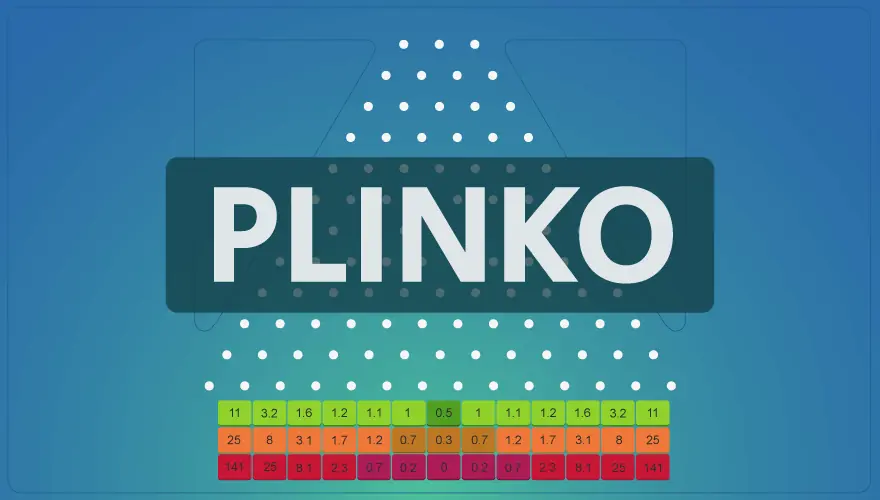
Plinko is a chance-based casino game built around a falling ball. You choose a stake, often select a risk mode, and then release the ball from the top of the board. As it hits peg after peg, it bounces left and right until it lands in a slot at the bottom. Each bottom slot carries a multiplier. Your return is your stake multiplied by the value of the slot where the ball finishes.
That basic loop is a major part of the appeal. There is no paytable full of symbols to learn, no Paddy Power Casino bonus for new players round to wait for and no need to understand several layered features before you begin. The game is visually readable even to a first-time player. You can watch the entire result happen in front of you in real time. That visibility matters. Many players feel that Plinko is more “honest-looking” than a slot because the path is shown rather than hidden behind spinning reels. Of course, the underlying outcome is still governed by the game’s random logic, but the presentation makes the uncertainty feel tangible.
Another reason Plinko became so noticeable is that it creates a strong contrast between frequent modest outcomes and occasional extreme multipliers. That structure is highly watchable. It is also highly shareable. One high-value landing can dominate the memory of an entire session, even if the average returns around it were much smaller. This is one of the most important practical truths about the format: Plinko is often remembered by its peaks, not by its baseline.
I would add one observation that often gets missed in generic detailed Paddy Power Casino Trustpilot ratings information for active casino players: Plinko feels simple because the rules are short, not because the experience is mild. Those are different things. A player can understand the board in ten seconds and still misjudge how quickly variance can shape the session.
How the Plinko mechanics actually work in play
At Paddy power casino, the exact presentation may vary depending on the provider, but the core structure of Plinko remains consistent. You start by selecting your stake. In many versions, you can also choose the number of rows and a risk profile such as low, medium or high. Once you launch the ball, it begins falling through a triangular peg layout. At each impact point, it moves one side or the other until it eventually reaches the bottom payout band.
The important thing to understand is that the board is not just decoration. The number of rows affects the distribution of possible outcomes. More rows generally mean a wider spread of potential landing points and, depending on the game design, a more pronounced difference between common centre results and rare edge results. The centre slots tend to be hit more often. The outermost slots, which usually hold the largest multipliers, are much less likely to be reached.
Risk level changes the shape of the payout distribution. In lower-risk mode, the board usually offers a tighter range of multipliers, with more landings clustering around modest values. In higher-risk mode, the lower end can become harsher while the top-end multipliers rise sharply. This is where many players misread the game. They see a possible 100x or 1000x-style outcome and focus on the headline number, but what matters more is how often the board pays back below stake, around stake or meaningfully above it.
Here is a practical breakdown of what the main adjustable elements usually mean:
| Setting | What it changes | What it means in a real session |
|---|---|---|
| Stake size | The monetary value of each drop | Directly affects how quickly your balance moves up or down |
| Rows | The depth of the board and outcome spread | Can increase suspense and widen the distance between common and rare results |
| Risk mode | The payout distribution across the bottom slots | Changes whether the session feels steadier or more swing-heavy |
| Auto-play or repeated drops | The speed of consecutive rounds | Can accelerate losses or gains faster than the simple interface suggests |
One subtle but important point: the movement of the ball looks physical, almost like a mini skill game, but for the player the result is still a random gambling event. The bouncing path creates drama, not control. That distinction matters because the visual journey can tempt people into believing patterns are forming when they are simply watching independent outcomes play out.
Where the excitement comes from and how the session tempo feels
Plinko’s session tempo is one of its defining traits. A slot spin often includes anticipation before the reels stop, then evaluation of line hits, scatters or bonus triggers. Plinko compresses everything into one visible descent. The action starts immediately, and the result arrives quickly. That gives the game a punchy rhythm that many players find refreshing.
But speed alone is not the whole story. The tension comes from the path. Every bounce creates a tiny moment of possibility. A ball drifting toward the edge can suddenly cut back inward. Another that seems destined for a low slot can continue outward and clip a much bigger multiplier. This creates a peculiar kind of suspense: not drawn-out like a bonus round, but concentrated into a few seconds of movement.
In practice, this means Plinko can feel deceptively light while still producing intense engagement. There are no animated story sequences, no themed soundtrack carrying the experience, no reel set to decode. Yet the brain locks onto the trajectory. I have often found that players who claim to prefer “simple games checklist” are not always looking for less stimulation; they are looking for more direct stimulation. Plinko delivers exactly that.
There is also a second memorable observation worth noting: Plinko compresses hope into a visible path. In slots, expectation is hidden until the reels settle. In Plinko, expectation is stretched across the fall itself. That is a big reason the format feels so watchable.
- Low-speed, lower-risk sessions tend to suit players who want short, readable rounds without violent balance swings on every drop.
- Fast repeated drops on higher-risk settings create a much sharper experience, where several low outcomes can arrive quickly before a rare bigger hit changes the picture.
The practical takeaway is clear: if you control the pace, Plinko can feel manageable. If you let the pace control you, it can become more aggressive than its clean layout suggests.
What players should understand about probability, variance and expected results
This is the section many players skip, and it is the section they most need. Plinko is not difficult to operate, but it is easy to misunderstand statistically. The board creates a visible distribution of outcomes. The middle slots are usually more likely. The edge slots are usually less likely. That means the biggest multipliers are rare by design, not merely uncommon by accident.
If a version of Plinko offers a return-to-player figure, that percentage reflects long-term theoretical performance over a very large number of rounds. It does not mean your session will behave smoothly. In fact, the opposite is often true. Depending on the risk setting, your actual sequence can be uneven, with clusters of low returns and occasional spikes. Two players can use the same stake and spend the same amount of time in the game while walking away with very different outcomes.
High-risk Plinko deserves special caution. The attraction is obvious: the upper multipliers look meaningful enough to transform a session quickly. The trade-off is that many drops may return less than stake, and some may feel underwhelming for long stretches. This is not a flaw in the design. It is the design. Players who only focus on the top prize ladder often miss the frequency profile of everything below it.
To make that more practical, here is how the broad risk profiles usually feel from a player’s perspective:
| Risk profile | Typical feel | Main trade-off |
|---|---|---|
| Low | More controlled and less dramatic | Top multipliers are usually limited |
| Medium | Balanced between regularity and upside | Can still produce uneven stretches |
| High | Sharper swings and stronger emotional peaks | Longer dry spells and heavier pressure on bankroll |
A third observation that separates Plinko from many other formats is this: the game often feels fairer than it feels forgiving. You can see the result unfold, which gives transparency to the moment, but transparency does not soften variance. A visible loss is still a loss.
How risky Plinko is and who is likely to enjoy it
Plinko can range from relatively gentle to highly aggressive depending on settings, but it is never a low-attention product. Even in lower-risk mode, the game encourages repeated action because each round is so quick and easy to process. That means bankroll discipline matters more than some players realise.
Who is it likely to suit? In my view, Plinko works best for players who enjoy short rounds, clear cause-and-effect visuals and a session style built around repeated independent outcomes rather than narrative features. It is also a good fit for people who like seeing the result path rather than just the final number. If you appreciate clean interface design and want a break from symbol-heavy slots, Plinko can be a strong alternative.
Who may not enjoy it? Players who love bonus hunts, free spins, expanding reels or layered feature progression may find Plinko too stripped back. There is no long-form feature arc here. There is no sense of “building toward” a round in the way some video slots create. Equally, players who dislike fast variance may become frustrated, especially if they choose high-risk mode expecting regular big returns.
I would summarise the suitability like this:
- Plinko may suit you if you want fast rounds, visible randomness and adjustable intensity.
- It may not suit you if you prefer strategic table decisions, feature-rich slots or slower session pacing.
How Plinko differs from slots and other casino games
The clearest difference between Plinko and classic slots is structural. A slot is usually built around reels, symbol combinations and feature triggers. Plinko is built around a single descent and a landing multiplier. That removes a lot of decorative complexity and puts almost all the focus on outcome distribution.
Compared with roulette, Plinko shares the appeal of a quick result and a strong role for chance, but the presentation is more visual and less abstract. Roulette gives you a wheel and a betting layout. Plinko gives you a path. Compared with blackjack details, there is no decision-making depth once the round starts. Compared with crash-style products, Plinko is less about timing a cashout and more about accepting a predefined random route.
What this means in practice is that Plinko occupies an unusual middle ground. It is simpler than many slots, more kinetic than many table games and more instantly readable than some modern instant-win products. That is part of its commercial strength. It can appeal both to experienced casino users who want a change of pace and to newer players who want something they can understand immediately.
Still, simplicity should not be confused with softness. The absence of reels and bonus rounds does not make the experience less intense. In some sessions, it makes it more concentrated.
Practical strengths and limitations of Paddy power casino Plinko
When I assess Paddy power casino Plinko as a game page rather than as a general casino product, the strengths are easy to identify. The format is intuitive, the rounds are short and the player can usually adjust the tone of the session through risk settings and stake size. That level of control is useful because it lets you shape the experience before you start dropping balls.
The game also benefits from strong visual clarity. You do not need to decode payline rules or check multiple feature layers to understand what happened. For many players, that makes the session feel cleaner and less cluttered. If the version available through Paddy power casino or Paddypower casino includes a demo or low-stake entry point, that can be especially helpful for understanding the board distribution before committing to a longer real-money run.
But the limitations are just as important. Plinko can become repetitive if you need evolving features to stay engaged. The rounds are quick, yet the underlying loop changes very little. That means the excitement must come from the distribution itself, not from variety. Some players love that purity. Others feel the repetition much sooner than they expected.
Another limitation is psychological rather than technical. Because the interface is so clean, it can understate the speed at which funds can move. A player may think, “It is only one more drop,” several times in a row because each round feels so light. That is one of the main practical hazards of the format.
- Strong points: easy to learn, fast to play, visually transparent, adjustable session intensity.
- Weak points: can feel repetitive, can encourage rapid repeat betting, high-risk mode can be punishing.
What to check before launching a Plinko session
Before you start a session, I recommend checking four things. First, look at the available risk level. Do not assume the default setting matches your style. Second, check the stake carefully. Because rounds resolve so quickly, even a modest increase can change the balance trajectory more than expected. Third, see whether the board allows row adjustments and understand that this is not cosmetic. It affects how the distribution feels. Fourth, decide in advance how long or how many drops you want to play.
That last point matters. Plinko is one of those formats where session boundaries help. Not because the game is uniquely dangerous compared with every other casino product, but because its pace is unusually frictionless. There is very little dead time to interrupt momentum. Setting limits before you begin is simply practical.
If you are new to the format, I would start with a lower stake and a lower or medium risk profile. That gives you room to observe the rhythm without chasing edge multipliers too early. Once you understand how often the centre band appears and how rare the outer values really are, you can make a more informed decision about whether the higher-risk version is genuinely appealing to you or just visually tempting.
Final verdict
Paddy power casino Plinko offers a very specific kind of gambling experience: fast, visual, stripped back and driven by distribution rather than feature depth. Its key strength is clarity. You can understand the premise instantly and feel the tension of each round without learning a complex rule set. Its second strength is flexibility. Through stake size, row count and risk mode, the same board can deliver a calmer session or a much sharper one.
That said, the game asks for realism. The clean interface does not reduce the chance of heavy swings. High-risk settings can be harsh, and the speed of repeated drops can make bankroll movement feel lighter than it actually is. Players who enjoy direct suspense and visible randomness may find Plinko highly engaging. Players who want strategic input, slower pacing or feature-rich progression may be better served by blackjack, roulette or a more layered slot.
My honest conclusion is that Plinko is worth trying if you want a casino format that gets to the point quickly and makes probability feel visible. Just do not mistake simplicity for safety. The game’s charm lies in how little it hides — and its danger lies in how easy that makes it to keep going.
FAQ
How does Plinko work step by step?
A player places a stake, the ball drops from the top board, then it bounces between pegs and lands in a scoring slot. The slot determines the multiplier that applies to the stake.
Is Plinko high risk, and how should volatility be considered?
Plinko is typically classed as higher volatility because outcomes can swing quickly between small and large multipliers. A smaller session limit and careful stake sizing help keep real-money play manageable.
What does a multiplier mean in Plinko?
The multiplier is the factor applied to the stake based on where the ball lands. That multiplier determines the win or loss shown for the round.